Terminals at Brisbane Airport (BNE)
Information compiled by David Enrich, aviation and airport guide expert since 1999.
Brisbane Airport is one of Australia’s largest aviation hubs and serves as the main gateway to Queensland. The airport operates two major passenger terminals: the International Terminal and the Domestic Terminal. Together, these terminals connect Brisbane with dozens of destinations across Australia and the world. Brisbane Airport operates 24 hours a day and offers direct flights to more than 80 destinations in over 25 countries.
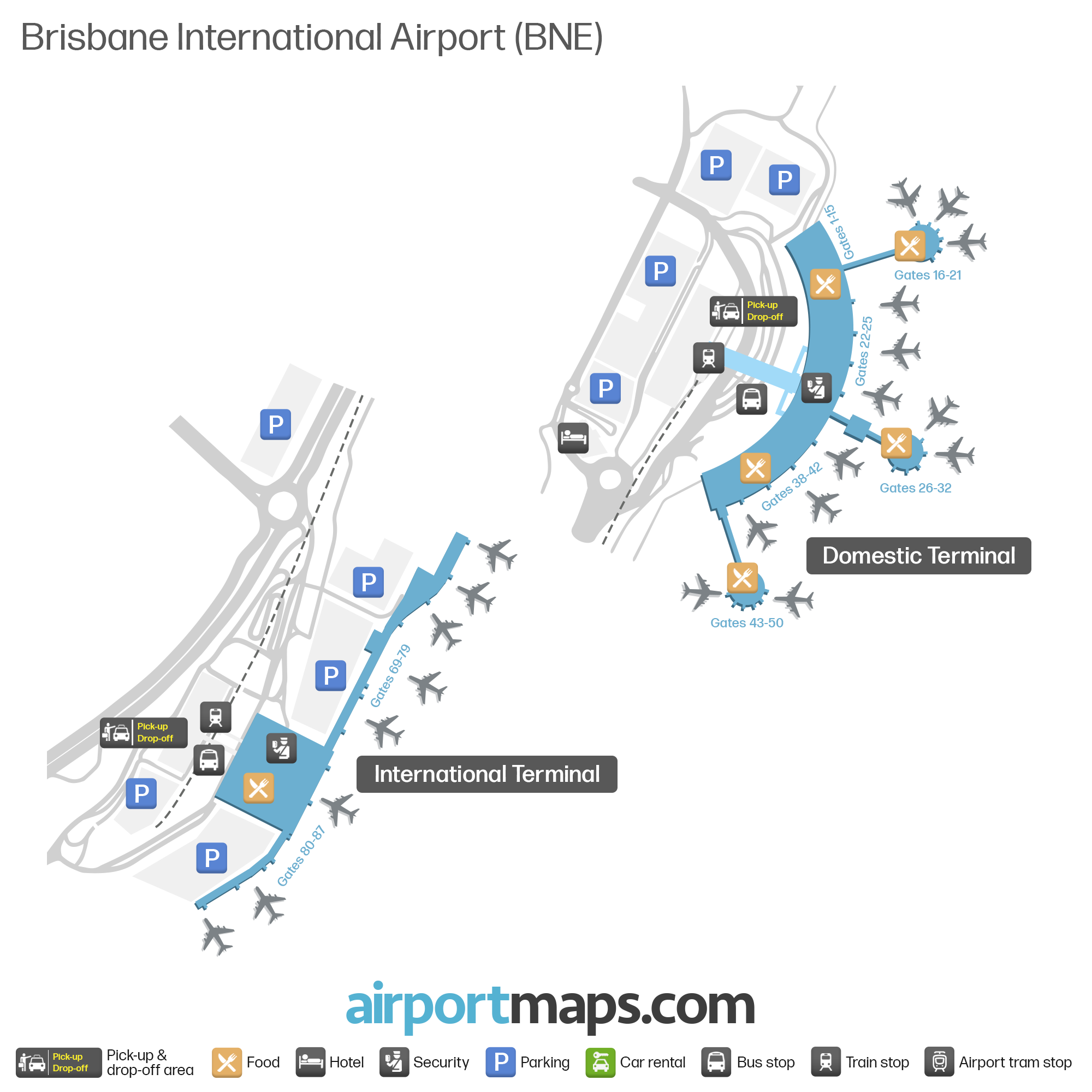
The two terminals are located approximately 4 km apart, and passengers transferring between them can use the free airport transfer bus or train services. Travel time between the terminals is usually around 10 minutes.
If you are connecting between domestic and international flights, allow at least 90 minutes to transfer between terminals, especially during peak travel periods.
Brief History of Brisbane Airport Terminals
Brisbane Airport has undergone significant development since the 1990s. The modern International Terminal was built in the early 1990s and officially opened in September 1995 as part of a major expansion of Queensland’s aviation infrastructure.
Since then, the airport has continued to modernize and expand its facilities. Several redevelopment projects have increased retail space, improved passenger processing areas, and upgraded security and baggage handling systems. One major renovation of the International Terminal added thousands of square meters of floor space and redesigned arrival and departure areas to improve passenger flow.
Today, Brisbane Airport is the third busiest airport in Australia and plays an important role in connecting the state of Queensland to international markets and domestic destinations across the country
Brisbane Airport Terminal Map
International Terminal
The International Terminal handles all long-haul and international flights from Brisbane. It is a modern multi-level facility designed to manage high volumes of passengers traveling to destinations across Asia, the Middle East, North America, and the Pacific.
The terminal consists of several main levels:
- Level 1 – Arrivals: Immigration, customs, baggage claim, and ground transportation access.
- Level 2 – Departures: Check-in counters, security screening, duty-free shopping, and boarding gates.
- Level 3 – Airline lounges: Premium lounges and additional passenger facilities.
The terminal includes multiple aerobridges capable of handling large aircraft such as the Airbus A380.
The International Terminal offers some of the best runway views in the airport, especially from restaurants and lounge areas near the departure gates.
Domestic Terminal
The Domestic Terminal handles flights within Australia and is one of the busiest parts of the airport. It is a large two-level building with several satellite gate areas extending from the main structure to accommodate multiple airlines.
The terminal is divided into sections that serve different airlines:
- North Section: Primarily used by Qantas and QantasLink.
- Central Section: Used by airlines such as Jetstar.
- South Section: Mainly operated by Virgin Australia.
The terminal contains numerous shops, restaurants, airline lounges, and passenger waiting areas. Clear signage and short walking distances make navigation relatively easy compared with many large airports.
Domestic flights in Australia often begin boarding 30 minutes before departure, so it is recommended to arrive at the gate early.
Passenger Facilities and Services
Both terminals offer a wide range of passenger facilities designed to improve comfort and convenience.
Services for Families and Passengers with Reduced Mobility
Brisbane Airport is designed to be accessible for all travelers. The terminals include elevators, accessible restrooms, ramps, and assistance services for passengers with reduced mobility.
- Wheelchair assistance available through airlines
- Accessible parking spaces near terminal entrances
- Family restrooms and baby changing facilities
- Special assistance areas in check-in halls
The airport also provides Changing Places facilities designed to assist travelers with complex disabilities and their carers.
Security Screening and Baggage Control
All departing passengers must pass through security screening before entering the boarding gate areas. Carry-on luggage is scanned using advanced security equipment, while checked baggage is processed through automated baggage handling systems.
During peak travel times such as early mornings or holiday periods, arriving at least two hours before an international flight is recommended.
Lost and Found
Passengers who lose items inside the terminals should contact the airport’s Lost Property service. Items left on aircraft are usually handled directly by the airline.
Check-in and Boarding Information
Airlines at Brisbane Airport offer several check-in options including traditional counters, self-service kiosks, and automated baggage drop systems. Many airlines also provide online check-in, allowing passengers to print their boarding passes or use mobile boarding passes before arriving at the airport.
Online check-in can save time at the airport and allow passengers to go directly to baggage drop or security.
Typical Security Wait Times
Popular Flights from Brisbane Airport
Brisbane Airport serves a wide range of domestic and international destinations. Some routes are particularly popular due to business travel and tourism demand.